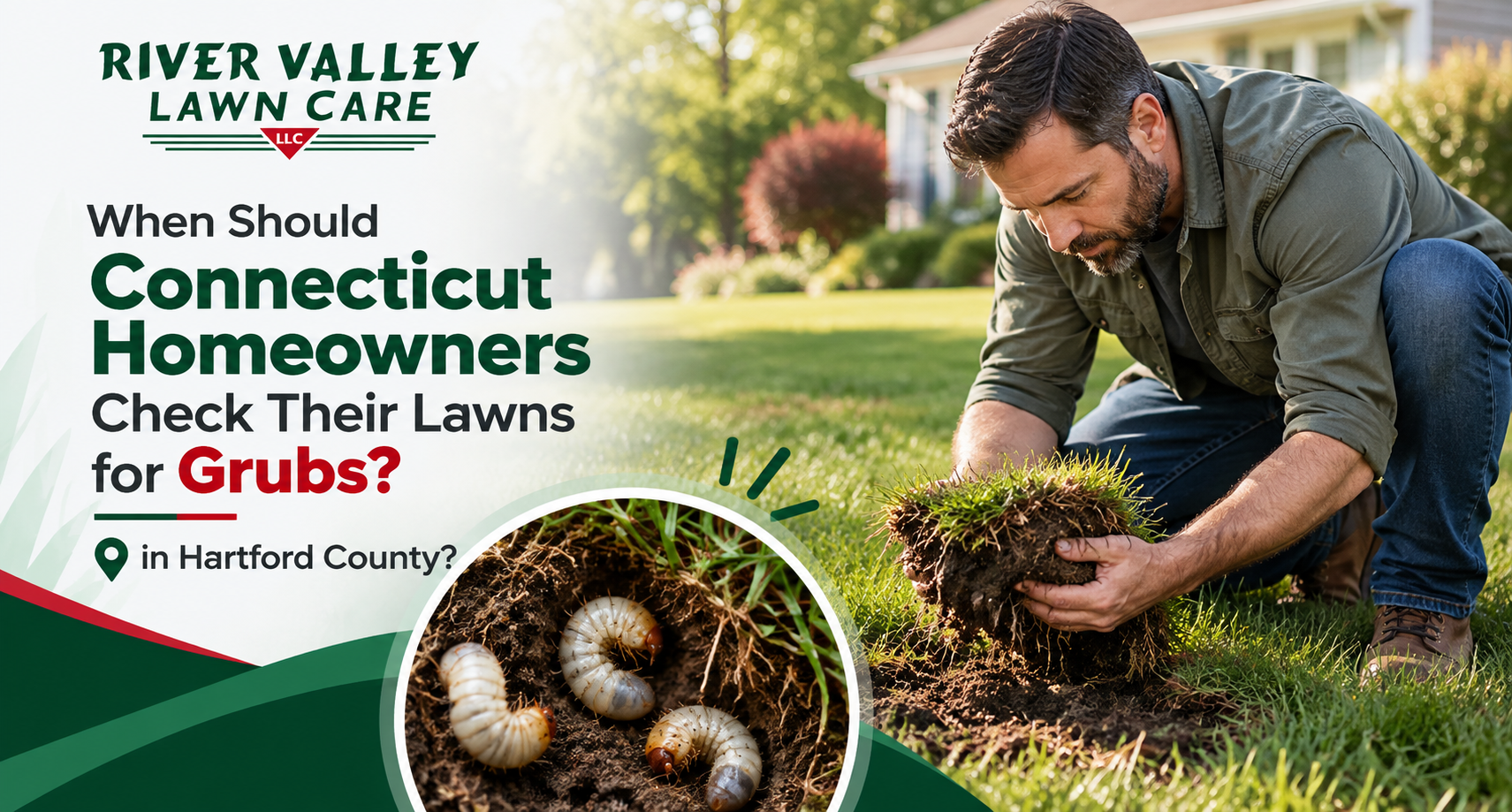
Grubs are a common lawn concern that can be difficult to notice because they live beneath the soil. These small, white, C-shaped larvae feed on grass roots, which can gradually weaken the turf. By the time homeowners notice brown patches or loose grass, the roots may already have experienced damage.
For homeowners in Hartford County, understanding when grubs are active and what signs to look for can make lawn maintenance easier. Regular inspections can help identify potential problems early and prevent confusion between grub damage and other common lawn issues.
What Are Lawn Grubs?
Lawn grubs are the immature stage of certain beetles. Adult beetles lay eggs in the soil during the warmer months. After the eggs hatch, the young grubs remain underground and feed on grass roots.
Healthy roots are important because they help grass absorb water and nutrients while keeping the turf firmly established. When grubs feed on these roots, affected sections of the lawn can become weaker and may have difficulty recovering from normal seasonal stress.
Because grubs stay below the surface, homeowners may not immediately see the insects themselves. Instead, changes in the appearance and condition of the lawn are often the first warning signs.
When Should You Check Your Lawn for Grubs?
Late summer and early fall can be an important period for homeowners in Connecticut to pay closer attention to their lawns. Many beetles lay eggs during summer, and young grubs develop in the soil afterward.
As the season progresses, damage to grass roots can become easier to notice. Areas that previously looked healthy may begin to thin, turn brown, or feel loose.
This does not mean that every lawn needs grub treatment during a specific month. Instead, homeowners should use this seasonal period as an opportunity to inspect areas that appear weaker than the surrounding turf.
What Does Grub Damage Look Like?
Grub damage can sometimes be confused with other lawn problems. Brown grass can be caused by drought, disease, poor watering, soil conditions, or insect activity, so it is important not to assume that grubs are responsible without checking.
Some possible warning signs include:
- Irregular brown or thinning patches
- Grass that lifts easily from the soil
- Damaged or weakened roots
- Animals digging into the lawn
- Grass that continues to decline despite normal watering
- Patches that appear particularly weak during late summer or early fall
When several of these signs occur together, inspecting the soil beneath the affected turf may be worthwhile.
Why Do Grubs Damage Grass?
Grass roots provide the foundation for healthy turf. They absorb moisture and nutrients and help keep grass securely established in the soil.
When grubs feed on the roots, the affected grass may become less capable of handling heat, dry conditions, foot traffic, and other seasonal stresses. Significant root damage can eventually lead to thin or bare areas.
This is one reason why early observation matters. A homeowner who notices changes in the lawn can investigate the cause before assuming the problem is simply related to weather.
How Can Homeowners Check for Grubs?
A simple inspection can provide useful information. Homeowners can carefully lift a small section of turf in an area that looks damaged and examine the soil underneath.
Look around the root zone for small, curved larvae. It is also useful to observe whether the grass roots appear healthy and whether the turf remains firmly attached to the soil.
Finding a few grubs does not automatically mean the lawn requires treatment. The number of insects, condition of the turf, and other factors should be considered before deciding what action is appropriate.
If the cause of the lawn damage is unclear, professional evaluation can help distinguish grub activity from other problems.
Grubs Are Not the Only Lawn Problem
Connecticut lawns can experience many different problems throughout the growing season. Weeds, soil compaction, nutritional deficiencies, drought, disease, and insects can all contribute to weak or discolored grass.
For example, weeds can compete with grass for water, sunlight, nutrients, and space. Homeowners looking for weed control services near me in Vernon may be dealing with a weed problem rather than insect-related root damage.
Identifying the actual cause is important because different lawn problems require different solutions. Treating the wrong issue may not improve the condition of the grass.
How Regular Lawn Care Helps
Consistent lawn maintenance makes it easier to recognize changes in turf health. Proper mowing, watering, fertilization, aeration, weed management, and appropriate pest control can all support stronger grass.
Homeowners should also make regular lawn inspections part of their seasonal routine. Walking around the property and checking unusual brown patches, thin areas, and sections of loose turf can help identify potential concerns earlier.
Professional lawn care can provide another level of support by examining the condition of the grass and helping determine what may be affecting the property.
Consider the Whole Property
Lawn health is only one part of maintaining an outdoor property. Homeowners may also encounter other pests during Connecticut’s warmer months.
Ticks, for example, are a separate concern from lawn grubs and require a different management approach. Property owners researching Fast tick control services in Wethersfield can learn about options for addressing tick concerns around outdoor areas.
Understanding the difference between lawn insects and other outdoor pests can help homeowners choose appropriate services instead of treating every problem the same way.
Professional Lawn Care in Hartford County
Homeowners who regularly notice thinning grass, brown patches, or other changes may benefit from professional lawn-care guidance. A trained lawn-care provider can assess the turf and help identify whether insects, weeds, soil conditions, or seasonal stress may be contributing to the problem.
For homeowners looking for ongoing lawn maintenance and seasonal support, River Valley Lawn Care provides lawn-care services designed to help maintain healthier outdoor spaces.
Keep Grub Checks on Your Seasonal Checklist
There is no single date when every lawn in Hartford County needs to be checked for grubs. However, late summer and early fall are useful times to pay closer attention to lawn condition because grub activity and related root damage may become more noticeable.
If you see brown patches, thinning turf, loose grass, or increased animal digging, take a closer look before assuming the cause. Identifying the problem correctly is the first step toward choosing the right lawn-care approach.
Regular inspections combined with proper seasonal maintenance can help Connecticut homeowners keep their lawns healthier and recognize potential problems before they become widespread.