
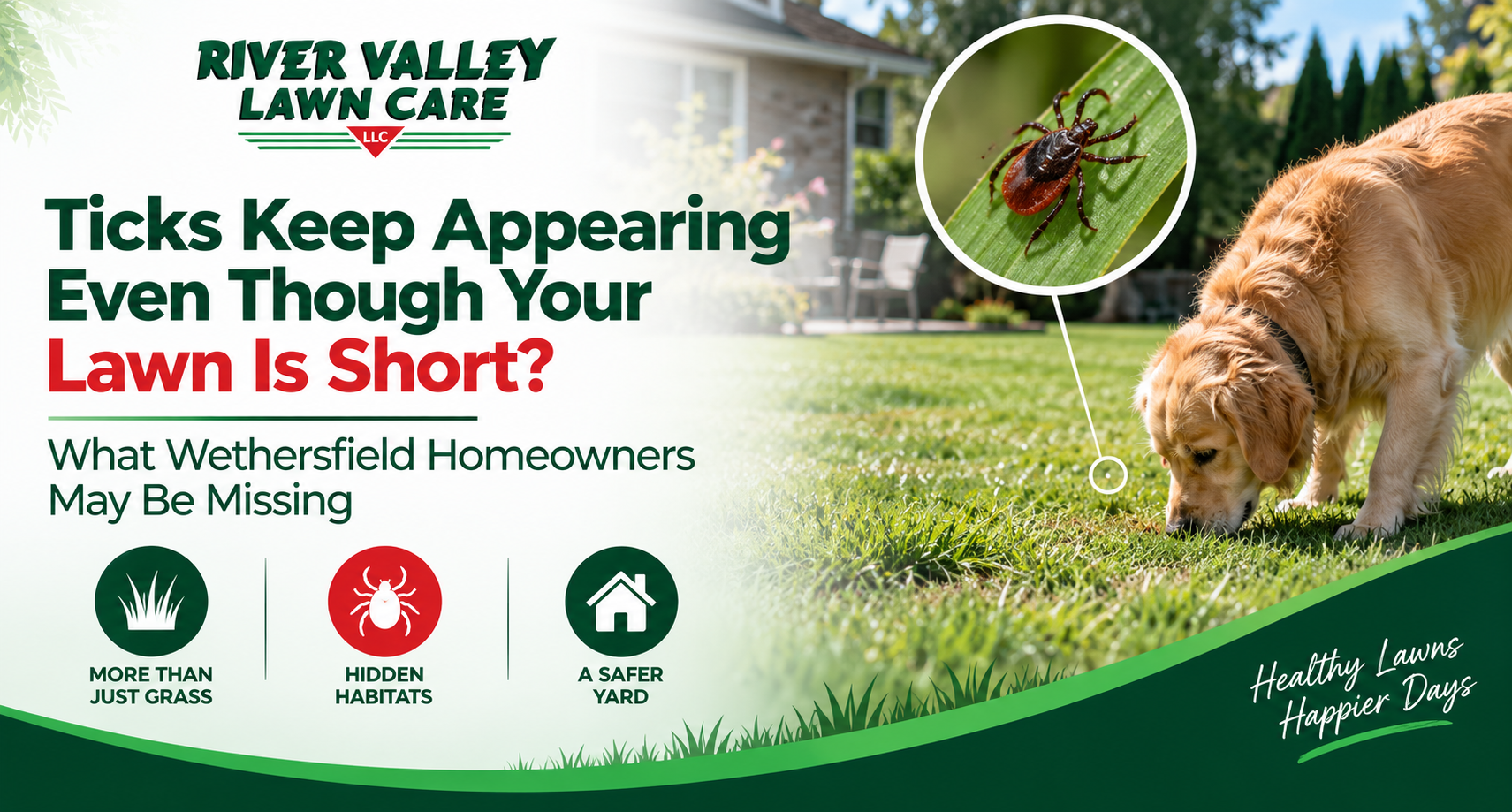
Keeping your lawn neatly mowed is an important part of maintaining your property, but what happens when you still find ticks even though the grass is short? Many Wethersfield homeowners assume that regular mowing should be enough to keep ticks away. Unfortunately, tick activity is influenced by much more than grass height.
Ticks often prefer areas that provide moisture, shade, leaf litter, vegetation, and access to wildlife. This means a well-maintained lawn can still have tick activity around its edges, garden beds, wooded borders, or other sheltered areas. Understanding where ticks are likely to live can help homeowners make their yards less inviting to them.
Short Grass Doesn’t Mean a Tick-Free Yard
Regular mowing can reduce some favorable tick habitat, especially where grass has become tall and overgrown. However, ticks do not live only in tall grass.
They may be found along shaded property borders, underneath leaves, around shrubs, near stone walls, or where lawns meet wooded areas. These locations can remain cool and humid even when the main lawn is sunny and closely mowed.
That is why tick prevention should involve looking at the entire property rather than focusing only on grass height.
Pay Attention to the Edges of Your Property
The middle of an open, sunny lawn may provide less favorable conditions for ticks than shaded areas around the perimeter.
Look closely at places where your lawn meets woods, brush, fences, ground cover, or dense landscaping. Leaves and organic debris can accumulate in these areas and create sheltered conditions.
If ticks continue appearing around your property, River Valley Lawn Care can help homeowners evaluate lawn and pest-management needs as part of a broader approach to maintaining the outdoor space.
Leaf Litter Can Create Ideal Hiding Areas
Fallen leaves are easy to overlook, especially when they collect underneath shrubs, along fences, or behind sheds.
Leaf litter can hold moisture and protect ticks from dry conditions. Research on blacklegged ticks has found that removing leaf litter from frequently used areas can be one part of reducing suitable tick habitat.
Regularly clearing leaves from patios, play areas, lawn edges, and other spaces where people spend time can therefore be useful. The goal is not to remove every leaf from the entire property but to reduce sheltered habitat around high-use areas.
Wildlife May Be Bringing Ticks Into the Yard
Ticks do not necessarily begin their life cycle on your property. Wildlife can carry them into residential landscapes.
Deer are important hosts for adult blacklegged ticks, while small mammals and birds can host ticks during other life stages. A yard that regularly attracts wildlife may therefore experience tick activity even when the grass itself is well maintained.
Homeowners can consider whether bird-feeding areas, brush piles, wood piles, dense vegetation, or other landscape features are attracting wildlife close to areas where the family spends time.
Shade and Moisture Matter Too
Ticks are vulnerable to drying out, which is one reason they tend to favor humid, sheltered environments.
A shaded garden bed with thick ground cover can provide very different conditions from the sunny lawn only a few feet away. Poor drainage, dense shrubs, overgrown vegetation, and consistently damp areas can also create favorable microhabitats.
Trimming vegetation appropriately, improving airflow, addressing persistent drainage problems, and removing unnecessary debris can make certain parts of the landscape less hospitable to ticks.
Create Separation Around High-Use Areas
Think about where your family actually spends time outdoors. Patios, children’s play equipment, seating areas, walkways, and frequently used sections of the yard deserve particular attention.
The CDC recommends landscaping approaches that can include creating a barrier of wood chips or gravel between lawns and wooded areas, removing leaf litter, clearing tall grasses and brush, and keeping recreational areas away from yard edges and trees.
For homeowners experiencing persistent problems, professional Fast tick control services in Wethersfield can complement landscape maintenance by targeting appropriate areas of the property. No treatment, however, can guarantee that a yard will remain completely tick-free.
Don’t Forget About Overall Lawn Health
Tick management and lawn health are different issues, but general property maintenance can affect the environment around your home.
Thin turf, excessive weeds, unmanaged vegetation, and overgrown borders can change how different parts of a yard are used and maintained. A thick, appropriately maintained lawn also makes it easier to notice areas where unwanted vegetation or debris is developing.
Homeowners researching weed control services near me in Vernon should remember that weed management is primarily about improving lawn condition and controlling unwanted plants. It should not be treated as a substitute for a specific tick-management strategy.
Protect Yourself Even in a Maintained Yard
Landscape changes can help reduce tick habitat, but personal precautions are still important.
After spending time in potentially tick-prone areas, check clothing, children, pets, and your body for ticks. Showering soon after coming indoors and checking clothing can also help identify ticks before they remain attached for long periods.
The CDC recommends checking areas such as under the arms, around the ears, behind the knees, around the waist, between the legs, and in the hair.
If you find an attached tick, remove it promptly using fine-tipped tweezers by grasping it close to the skin and pulling upward with steady pressure. Contact a healthcare professional if you have concerns about a tick bite or develop symptoms afterward.
Final Thoughts
A short lawn can be part of good property maintenance, but mowing alone does not eliminate the conditions ticks need to survive.
For Wethersfield homeowners, the areas around the lawn may matter just as much as the grass itself. Leaf litter, wooded edges, dense vegetation, wildlife activity, shade, and moisture can all contribute to tick-friendly conditions.
By maintaining these areas, taking personal precautions, and using targeted professional services when appropriate, homeowners can reduce tick habitat and make their outdoor spaces more comfortable—while understanding that no lawn-care or tick-control approach can promise a completely tick-free property.